Region Locked: A Collector's Guide to Importing Nintendo
Some Nintendo handhelds are open to any region. Some are locked tight. Here's the actual current state, console by console, plus a step-by-step import workflow for collectors who want the global library.
Region Locked: A Collector's Guide to Importing Nintendo Handheld Games
You've been watching the same five Game Boy games cycle through eBay for months, and the copy you've been after is sitting in a Yahoo Japan auction for a quarter of the price. The only problem is that it's a Japanese cartridge, and your Game Boy is an American one, and everything you vaguely remember hearing says Nintendo handhelds are region-locked.
Yes. And no. And it depends.
This is the part of collecting that nobody tells you about at the start. Region locking on Nintendo handhelds is a moving target, and the rules are different for almost every console in the lineup. Some are open. Some are partially open. Some are open with caveats, and some are technically locked but practically meaningless because the games came out worldwide anyway.
Here's the actual picture, console by console, with the practical import advice that goes with each.
The Generation-by-Generation Reality
Game Boy, Game Boy Color, Game Boy Advance
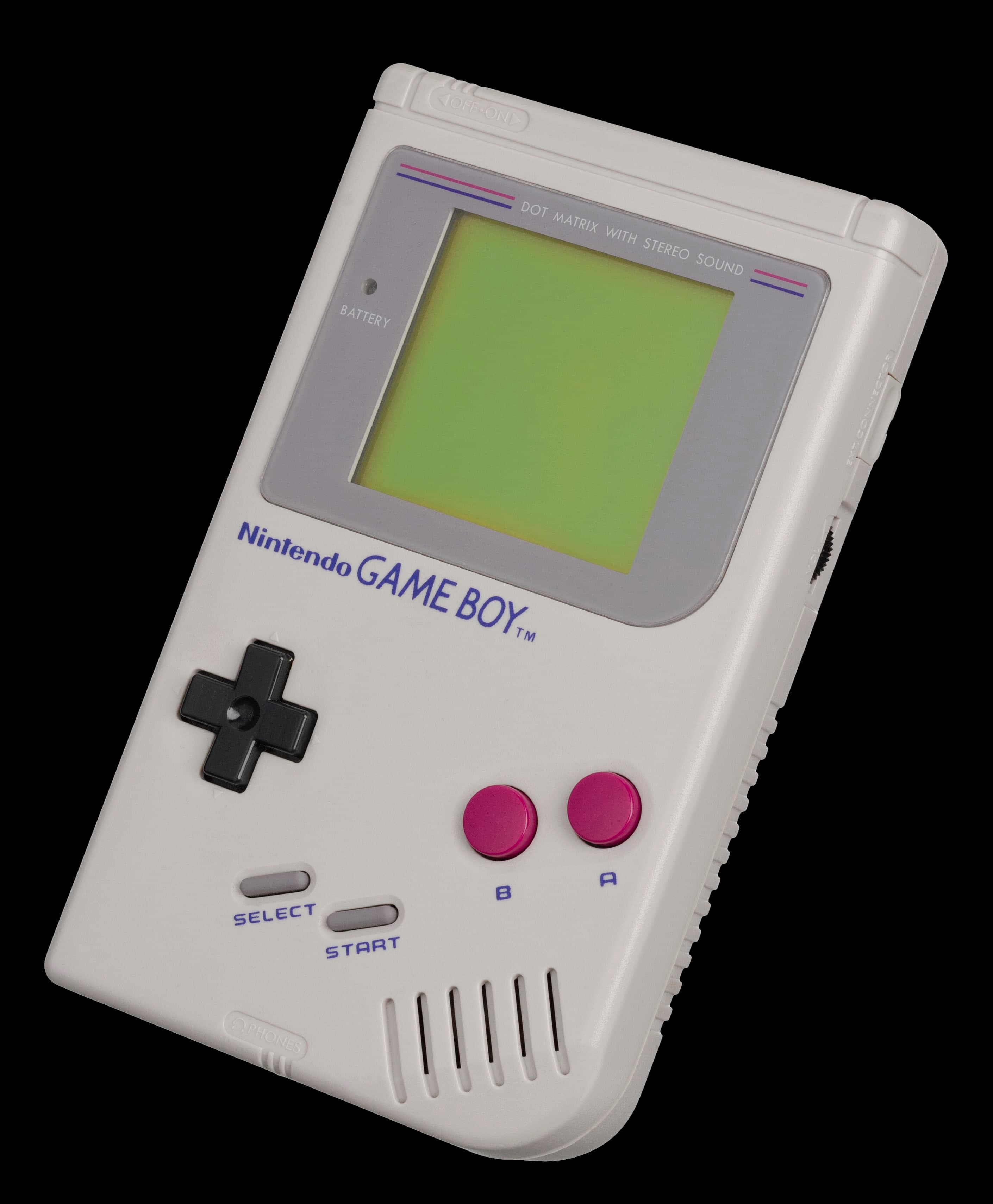
These are the easy ones, and the good news. The original Game Boy and its immediate successors have no region lock whatsoever. Drop a Japanese Pokémon Red into an American Game Boy Pocket, and it boots. Drop a European Tetris into a Japanese Game Boy, and it boots. The cartridge reader doesn't care where the game came from. The only thing that ever varies is the language, and for many collectors that's the whole point.
What you need to know:
- All Game Boy, Game Boy Color, and Game Boy Advance cartridges are region-free. The hardware will play any region of cartridge on any region's console.
- The Game Boy Micro is the only outlier. It dropped the original wide cartridge slot in favour of a smaller, Game Boy Advance-only design. Functionally it's still region-free, but the older DMG-style cartridges simply don't fit.
- Label authenticity matters. Japanese Game Boy games often came in different boxes, with different manual artwork, and with a different colour scheme for the cartridge shell. A Japanese Pokémon Red has a red cartridge, while the Western version has a red cartridge and a different label. Check what you're buying.
- Save batteries. Many older Game Boy games (Pokémon, Final Fantasy Legend, The Legend of Zelda: Link's Awakening) have a CR2025 or CR2032 battery inside the cartridge that keeps the save alive. The batteries die after 20+ years. If the seller can't confirm a recent battery swap, plan to do it yourself.
Nintendo DS and Nintendo DSi
The Nintendo DS is where region locking gets interesting, and the answer is "kind of." Original DS games are, like the Game Boy, region-free. You can put a Japanese Animal Crossing: Wild World into an American DS Lite and it works, period. The slot-1 cartridges don't care.
The complications show up with the DSi and the DSiWare shop, neither of which we'll dwell on here because DSiWare is essentially dead and the DSi hardware itself is collectable more for sentimental reasons than for play value.
What you need to know:
- Original DS (NTR-001) and DS Lite (USG-001) play all region DS games. The slot-1 hardware has no region check.
- The DSi added a region check on DSiWare downloads — but since DSiWare is no longer purchasable, this is largely academic.
- Slot-2 (GBA) games on the DS Lite work region-free. The GBA slot is identical to the original GBA hardware.
- Watch out for region-specific power adapters and chargers. DS Lite chargers are interchangeable worldwide by voltage, but the plug shape obviously varies. Buy a cheap multi-region adapter and you're sorted.
Nintendo 3DS and New 3DS
This is the generation where Nintendo finally, explicitly, intentionally region-locked its handheld. 3DS cartridges are region-locked. A Japanese copy of Pokémon Sun will not play on a North American 3DS, full stop. A European The Legend of Zelda: A Link Between Worlds will not play on an Australian 3DS.
The lock is enforced at the cartridge reader level, and there's no exploit, no mod, and no adapter that gets around it. If you want to play a Japanese 3DS game, you need a Japanese 3DS. End of story.
The new wrinkle is the New Nintendo 3DS, which has a small library of exclusive games (most famously Xenoblade Chronicles 3D and The Binding of Isaac: Rebirth) that physically won't fit in an old 3DS. These are also region-locked, of course, because why would Nintendo make it easy.
What you need to know:
- 3DS and New 3DS cartridges are region-locked. Buy the correct region for your console, or buy a second console of the correct region.
- Region-free homebrew exists on hacked 3DS consoles, but this voids the warranty on systems that still have one, can brick the system if done wrong, and is morally murky. We won't recommend it.
- The eShop shutdown in March 2023 makes this less of an issue than it was. You can't buy 3DS games digitally anymore, so collectors are mostly working from the second-hand physical market now, and that market has settled into a regional equilibrium. A Japanese Fire Emblem Awakening is cheaper in Japan than anywhere else, and importing one means you need a Japanese 3DS. Plan accordingly.
- The 2DS, New 2DS XL, and New 3DS XL all share the same region lock as the 3DS. The form factor doesn't change the rule.
A Practical Import Workflow
If you've decided to import a game — say, a Japanese copy of a rare Game Boy title, or a North American DS game that's inexplicably absent from the European market — here's the step-by-step that experienced collectors actually use.
1. Confirm the Game Exists in the Region You're Importing From
Sounds obvious, but it's the most common import mistake. A surprising number of games released in one region never released in another, and a "Japanese-exclusive" cartridge in an eBay listing might actually be a region-free release that came out everywhere. Cross-check the game's title and serial number against a database like GameFAQs or the appropriate Wikipedia list before you bid.
2. Check the Cartridge or Box Condition
Importing means you can't easily return the item. Sellers in the country you're importing from are usually not set up for international returns, and the cost of shipping the item back often exceeds the value of the item itself. So you need to be confident about condition before you commit.
What to look for:
- Photos of the actual item, not stock photos. Many Japanese Yahoo Auctions sellers are good about this, and the photo will show the exact condition of the cartridge label and shell.
- Save batteries on Game Boy and DS games. If the battery is dead, the game will work, but you'll lose save data the moment you power off. Factor in a $5 battery and 20 minutes of soldering if you care.
- Boxed and complete (CIB) versus loose cartridge. The price difference is usually 3–5x. Decide which you want and stick to it.
- Manual presence and language. A Japanese Pokémon game with an English manual inside is suspicious and probably a fake or a custom job. Genuine Japanese manuals are entirely in Japanese.
3. Choose a Buying Channel
For Japanese imports specifically, the three realistic options are:
- eBay Japan (now unified into the main eBay). Buyer protection is real, prices are higher than direct-from-Japan, and listings are usually in English.
- Yahoo Japan Auctions (via a proxy service). The best prices in the world, but you need a proxy bidder (Buyee, ZenMarket, Jauce, etc.) to participate. The proxy service adds a 10–20% fee on top, but you can still come out ahead on rarer items.
- Specialist Japanese retro shops. Some, like Liam's Retro Game Store or the various sellers on Etsy, focus specifically on exporting Japanese games to Western markets. The prices are higher than Yahoo but the friction is much lower.
For North American imports into Europe (or vice versa), eBay is usually the best option. The shipping is faster, the listings are in English, and the buyer protection is solid.
4. Watch the Shipping Costs
This is the hidden cost of importing. A $20 cartridge can easily become a $50 cartridge once you've added tracked international shipping, and the destination country's customs duty can add another 5–25% on top. Always check your country's import duty threshold before you buy, and remember that "marked as gift" or "undervalued on customs form" is fraud, not strategy.
For small cartridges, the cheapest shipping is usually unregistered airmail — but this comes with no tracking and no insurance. For anything over $50 in value, pay for registered or tracked shipping, every time.
5. Verify on Arrival
When the cartridge arrives, before you leave feedback or close a dispute window:
- Open the package on camera. If there's a problem, you want timestamped evidence for the dispute.
- Test the game in your console within 24 hours. The window for "not as described" claims is usually short.
- Test saving and loading. Many "tested working" cartridges have working gameplay but a dead save battery. The seller may not have known.
- Compare the label and shell to reference photos online. A fake Japanese Pokémon game is one of the most common counterfeits in retro gaming, and the differences are subtle.
The Verdict
Region locking on Nintendo handhelds is a story of two halves. The Game Boy through GBA generation is wide open. The DS is mostly open. The 3DS is locked, and that's not going to change.
For collectors, this means the practical strategy is:
- Import freely from any Game Boy, Game Boy Color, Game Boy Advance, or DS game. Your existing console will play it.
- Buy a second console for 3DS imports, if you're serious about playing region-exclusive titles. A Japanese New 3DS XL is a perfectly serviceable console in its own right, and the prices have come down significantly in the years since the eShop shutdown.
A region-locked console isn't a wall. It's a door that opens onto a much bigger library than the one on your local eBay.
The cartridge's been there the whole time. You've just been looking on the wrong side of the world.