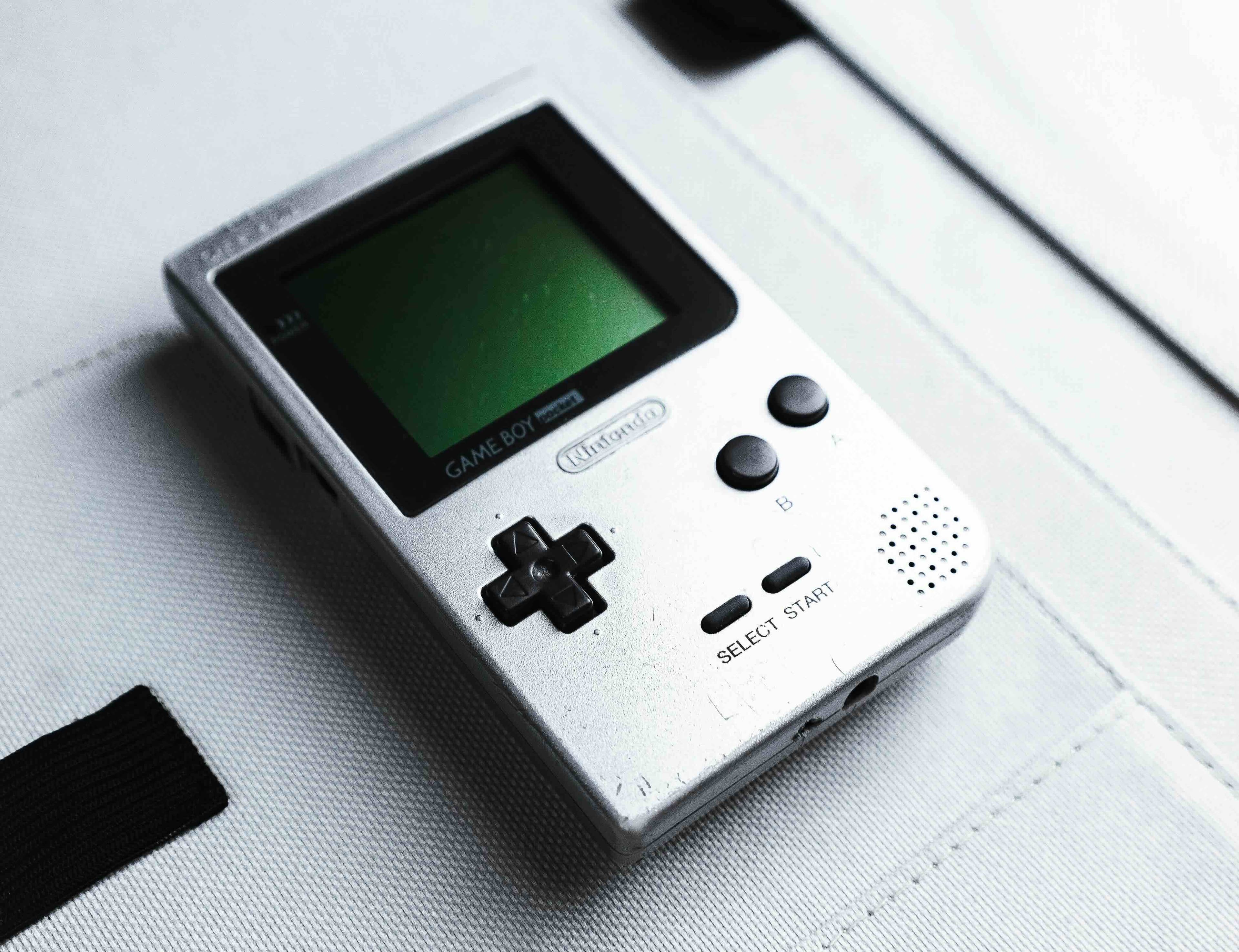
Same Games, Half the Brick
By 1996 the Game Boy was seven years old and still selling, but it was also the size of a paperback and weighed nearly a quarter of a kilo with its batteries in. Nintendo's answer wasn't a new console. It was the same one, shrunk until it actually fitted in a pocket.
The Game Boy Pocket arrived in Japan in July 1996 and reached the West later that year. It plays every original Game Boy cartridge, runs on two AAA batteries instead of four AAs, and weighs about 150 grams. It was one of the last pieces of hardware from Gunpei Yokoi's team, and it shows his instinct for making familiar technology better rather than chasing new tricks.
The Screen Got Better, Not Just Smaller
The headline change is the display. The original Game Boy's pea-green tint is gone, replaced by a sharper black-and-white LCD with much less of the motion blur that made fast games smear. Tetris pieces look crisper, and scrolling platformers stop leaving ghost trails behind Mario. It still has no backlight, so you still need a window or a lamp, but in good light it's a real step up.
There were trade-offs. Two AAA cells don't last as long as four AAs, and early models shipped without a power light, so the only warning of flat batteries was the screen fading. Nintendo added the LED back in a later revision. The link port also shrank, so you need an adapter cable to battle a friend on an original Game Boy.
The Machine That Caught Pokémon
The timing was perfect. Pokémon Red and Green launched in Japan the same year, and a smaller, cheaper-to-run Game Boy was exactly what millions of new players wanted to carry to school. The Pocket became the way a whole generation first played Pokémon, and its range of colours, from silver and gold to clear and bright pink, turned the console itself into something to collect. Nintendo also put out a long run of special editions in Japan, which we've gone through in Collecting Guide: Game Boy Pocket Editions.
If you're here for the Pokémon side of the story, How Pokémon Red and Blue Made the Game Boy Indispensable is the place to start.
Buying One Today
A Pocket is a great everyday retro handheld: small, light, and compatible with the entire original library. Check the screen for dead lines and the battery contacts for corrosion, and be wary of shells that look too perfect, since cheap reproduction cases are everywhere. Scratched screen covers are easy to replace.
Modders love the Pocket, too. Its shell takes backlit and IPS screen kits nicely, and a modded Pocket is one of the best ways to play the Game Boy library today. Or keep it stock, find a sunny window, and play Link's Awakening the way it looked in 1996.