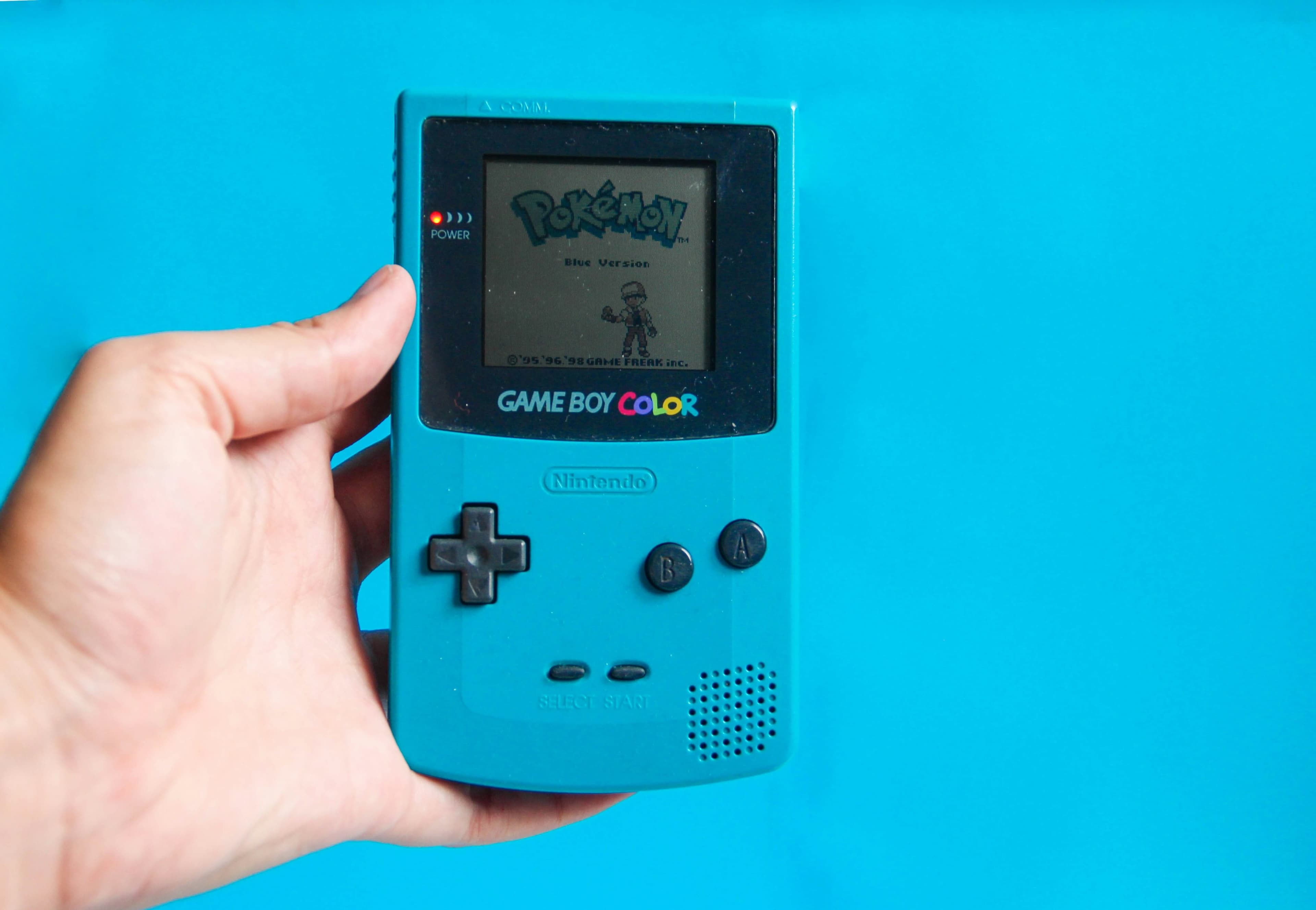
Colour, Finally, Nine Years Late
The Game Boy spent almost a decade being told it needed colour. The Lynx had it, the Game Gear had it, and the Game Boy kept winning anyway. When Nintendo finally gave in, in Japan in October 1998 and in the West that November, it did it the Game Boy way: cheap, tough, and with batteries that lasted.
The Game Boy Color runs on two AA batteries, fits comfortably in a hand, and plays almost every original Game Boy cartridge. Its processor can run at twice the original's speed, and its screen can show up to 56 colours at once from a palette of more than 32,000. It still has no backlight. Nintendo knew exactly how much battery life a lit colour screen would cost, and it wasn't willing to pay.
Old Games in New Colours
The neat trick is what happens to original Game Boy games. Slot one in and the Color paints it with a built-in palette, and you can choose a different scheme by holding a direction and a button as the logo appears. Some games, like Pokémon Yellow, were built to show off extra colour on the new machine while still working on the old one.
You can tell the cartridges apart at a glance. Black cartridges run on both the original Game Boy and the Color. Clear ones only work on the Color, because the game needs its extra speed or palette.
The Library That Made It
Pokémon Gold and Silver are the reason many people owned one. They added a day-and-night clock, a whole second region to explore after the credits, and colour that made the world feel alive. The Legend of Zelda: Link's Awakening DX added a colour dungeon to an already great game, and late gems like Shantae, released in 2002 when the Game Boy Advance was already out, show what developers could squeeze out of it.
That Gold and Silver clock has a catch: it runs on a small battery inside the cartridge, and after twenty-odd years many are dead or dying. We've covered how to keep your saves safe in Save the Save and how to replace the cells in Preserving Game Boy Cartridge Batteries.
Counted together with the original Game Boy, the family sold more than 118 million units, and the Game Boy Printer and Camera worked with it too. We still think those are the weirdest peripherals ever.
Buying One Today
A Game Boy Color is easy to find and comes in a rainbow of shells, from Atomic Purple to Dandelion yellow. Check for a scratched screen lens, a loose battery cover and corroded contacts. The unlit screen is hard work indoors, which is why IPS screen mods for the Color are hugely popular, and modded units are some of the best-looking handhelds you can buy.
Whichever route you take, start with Gold or Silver. Twenty-five years later, walking out of New Bark Town at sunrise still feels like the start of a summer holiday.