Nintendo's Red-Eyed Gamble
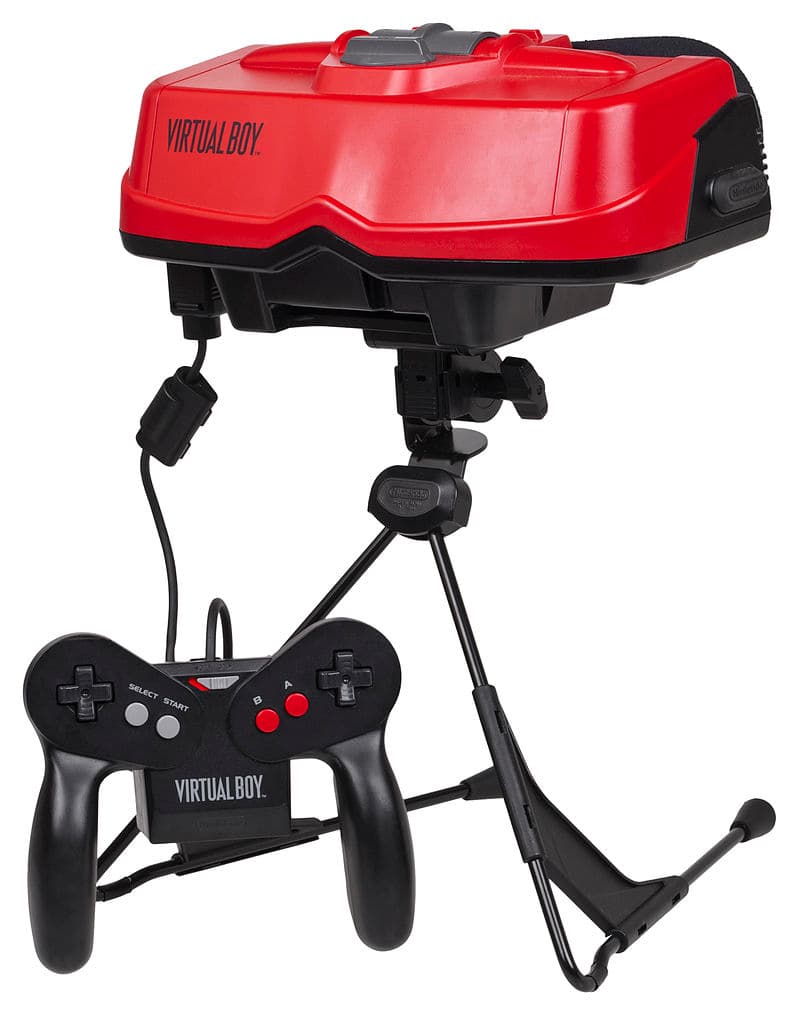
Picture a toy shop in the summer of 1995. On the counter sits a red-and-black visor on a tripod, and a queue of kids takes turns pressing their faces into it. Inside, a world drawn entirely in glowing red lines floats in genuine 3D. Nobody had seen anything like it. Within a year, almost nobody was buying it.
The Virtual Boy launched in Japan on 21 July 1995 and in North America that August. Europe never got it. It was the last major project of Gunpei Yokoi, the man behind Game & Watch and the Game Boy, and it was discontinued in less than a year after selling well under a million units, which makes it the biggest miss in Nintendo's hardware history.
How the 3D Actually Worked
There's no flat screen inside. Each eye gets its own column of red LEDs, and an oscillating mirror sweeps that column across your field of view fast enough for your brain to see a full 384×224 image. Feed each eye a slightly different picture and you get real depth, years before glasses-free 3D was a selling point. Red was chosen because red LEDs were the cheap, bright option at the time, and colour would have pushed the price far higher.
The catch is everything around that clever core. The planned head-mounted design became a tabletop stand, partly over health worries, so you play hunched over a desk. Games remind you to take breaks. Six AA batteries last about four hours. And a red-on-black image is a hard sell in a shop window, or in a magazine screenshot.
The Games Were Better Than the Reputation
Only 22 games came out, but the good ones are genuinely good. Virtual Boy Wario Land uses the depth brilliantly, with Wario hopping between foreground and background layers. Red Alarm is a wireframe shooter that feels like flying inside a vector arcade cabinet, and Teleroboxer turns the two D-pads into a pair of fists. Play them today and you can see what Nintendo was reaching for.
We've written about both sides of the story in The Rise and Fall of the Virtual Boy and The Virtual Boy: Nintendo's Beautiful Failure. The short version: the idea was right and the moment was wrong. Nintendo came back to glasses-free 3D with the 3DS in 2011, and that time it worked.
Collecting One Today
A Virtual Boy is now a proper collector's piece, and boxed units with the stand cost real money. The common failure is the display ribbon cable inside each eyepiece: when it goes, lines drop out of the image or a whole side goes dark. It's fixable, but test both eyes before you pay. Check the stand and the battery pack are present too, since they're easy to lose and surprisingly hard to replace.
Even with its faults, nothing else feels like it. Press your face to the visor, watch Mario's Tennis court stretch away into the dark, and you'll understand why people still love this beautiful mistake.