Two Screens and a Stylus
When Nintendo first showed the DS, plenty of people laughed. Two screens? A touchscreen and a stylus on a games console? A microphone you blow into? Sony was about to launch the PSP, a sleek multimedia powerhouse, and Nintendo's answer looked like a toy. Then it went on to become one of the best-selling consoles ever made.
The Nintendo DS launched in North America on 21 November 2004, in Japan that December and in Europe in March 2005. Nintendo called it a "third pillar" alongside the Game Boy Advance and the GameCube, because it wasn't sure the experiment would work. The lower screen is a resistive touchscreen, the top one shows the main action, and there's wireless play, a microphone and a second cartridge slot that plays Game Boy Advance games.
Touching Is Good
That was the marketing slogan, and it turned out to be true. The touchscreen made games possible that couldn't exist anywhere else: drawing paths for Kirby, stroking puppies in Nintendogs, solving sums in Brain Age with a stylus like a pencil. Those games reached people who had never owned a console, from schoolkids to their grandparents, and that wider audience is what made the DS such a phenomenon. We tell the launch story in Nintendo DS Launch: How Touching Is Good Changed Handhelds.
The Fight Nintendo Wasn't Meant to Win
The PSP had better graphics, a bigger screen and films on discs. The DS had cheaper games, longer battery life and a library nobody could copy. By the end, the DS family had sold more than 150 million units, making it one of the best-selling consoles of all time. We've written up how that happened in DS vs. PSP: The Handheld War Nintendo Wasn't Supposed to Win.
The games are the reason. New Super Mario Bros., Mario Kart DS, Pokémon Diamond, Pearl, HeartGold and SoulSilver, Professor Layton, Phoenix Wright, The World Ends with You and Chrono Trigger all live here. Our Top 10 DS Games is a good place to start building a collection.
Original or Lite?
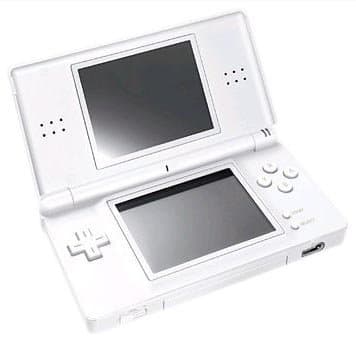
The original model, often called the "phat" DS, is chunky, with dimmer screens. In 2006 Nintendo released the DS Lite, slimmer and much brighter, and it quickly became the version most people owned. We celebrated it in Nintendo DS Lite at 20. The later DSi dropped the Game Boy Advance slot, so if you want both libraries in one machine, stick with the original or the Lite.
Buying One Today
Check both screens for dead pixels and scratches, especially the touchscreen. Test the hinge, which can crack on the Lite, and the shoulder buttons, which wear out. DS games are region-free, so imports work fine, and an original DS or a Lite will play Game Boy Advance cartridges too.
Pick one up, put in a game you missed, and remember how strange and wonderful it felt the first time you tapped the bottom screen.