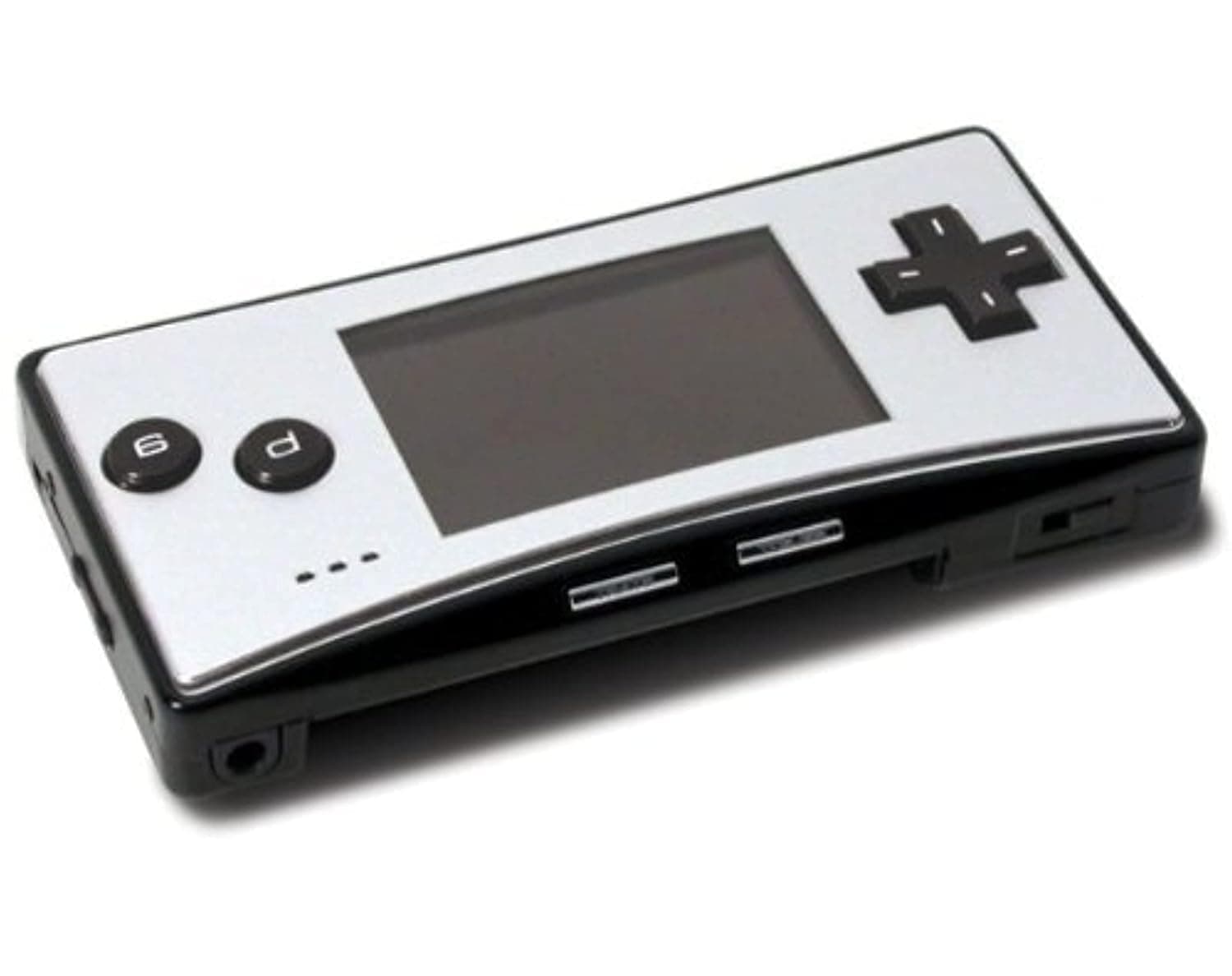
The Smallest Game Boy Ever Made
Hold a Game Boy Micro for the first time and you'll laugh. It's about the size of an old NES controller, weighs around 80 grams, and is thinner than most phones. Released in September 2005 in Japan and North America, and in Europe that November, it's the most beautifully made Game Boy of them all, and one of the least successful.
It plays Game Boy Advance cartridges on a sharp 2-inch backlit screen with adjustable brightness, has a built-in rechargeable battery, and comes in a metal-trimmed body with swappable faceplates. There's even a proper headphone jack, which the Game Boy Advance SP had famously left out.
Gorgeous, and a Bit Too Late
The Micro's screen is the star. It's small, but its pixels are packed so densely that Game Boy Advance games look crisp and bright, and many fans think it's the best stock screen the library ever had. The faceplates clip off and on, so you can change its look in seconds, and they protect the screen from scratches too.
The trouble was timing. The Nintendo DS had launched the year before, it also played Game Boy Advance games, and it was what everyone wanted. The Micro was also small enough that some players found it cramped for long sessions, and the tiny screen made text-heavy games hard work. It sold only a few million units, a tiny fraction of the DS or the SP.
What It Can't Play
There's one important limit: the Micro plays only Game Boy Advance games. The original Game Boy and Game Boy Color hardware that every earlier Advance model carried is gone, so it won't run Tetris, Pokémon Red or Link's Awakening DX. If you want to play the older libraries too, the Game Boy Advance SP is the better buy.
For the story of the console family the Micro finished, read The Game Boy Advance: Nintendo's Awkward Middle Child.
Collecting One Today
Low sales and a loyal following have made the Micro a collector's item, and prices have climbed for years. The special editions are the most sought after, especially the Famicom-styled version released in Japan for the Famicom's 20th anniversary, with its red-and-gold controller design.
Check the screen for scratches, since the faceplate only protects it when it's fitted, and make sure the faceplate isn't cracked. Test the battery, because many originals no longer hold a charge, and check that the charger, which uses its own small connector, is included. Watch out for reproduction faceplates sold as originals, too.
The Micro isn't the most practical way to play the Game Boy Advance library, but it might be the most delightful. Pop in a short, sharp game like WarioWare, Inc. and you'll see why it's become such a treasure.