3D Without the Glasses
In 2011 3D was everywhere: cinemas, televisions, even phones. All of it needed glasses, except the Nintendo 3DS. Slide the 3D switch up and the top screen pops into real depth, with no glasses and no visor. Sixteen years after the Virtual Boy, Nintendo finally got 3D right.
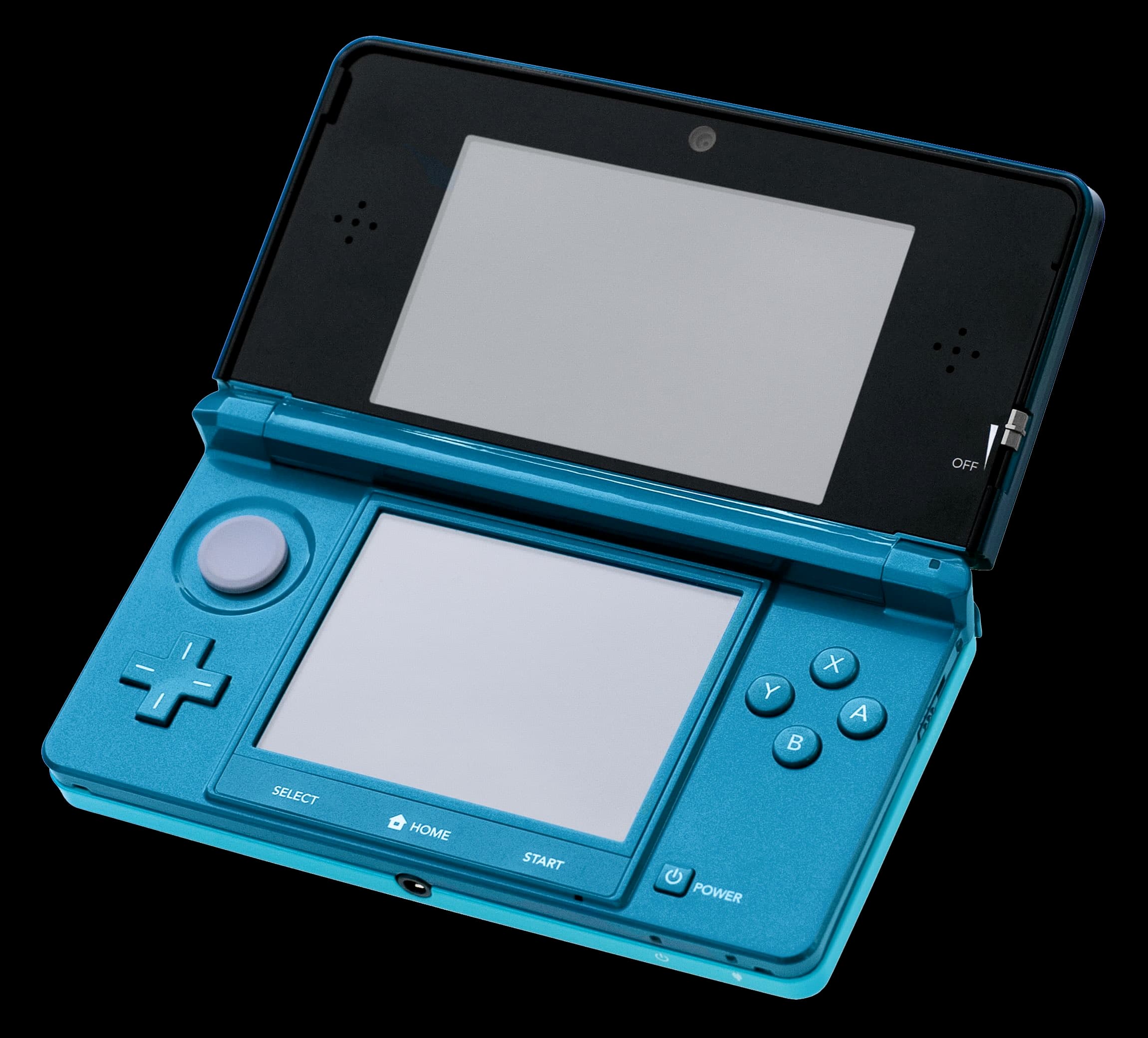
The Nintendo 3DS launched in Japan on 26 February 2011, in Europe in March and in North America days later. It has a widescreen 3D display on top, a touchscreen on the bottom, an analog Circle Pad for proper 3D movement, motion sensors and cameras that take 3D photos. It plays almost the entire Nintendo DS library as well.
How the 3D Works, and Why There's a Slider
The top screen uses a parallax barrier: a layer that sends a slightly different image to each eye, so your brain sees depth. It only works when you hold the console straight in front of you, and some players found it tiring. That's why there's a slider. Push it down and the 3D fades out, and many people ended up playing mostly in 2D. It was still a remarkable trick, and the console that followed the Virtual Boy finally delivered what that machine promised. We tell that story in The Virtual Boy: Nintendo's Beautiful Failure.
A Rocky Start and a Brilliant Finish
The 3DS stumbled out of the gate. It was expensive and its launch games were thin, so just months later Nintendo slashed the price and gave early buyers twenty free classic games to say sorry. It worked. Over the next few years the library grew into one of the best Nintendo has ever had: Super Mario 3D Land, Mario Kart 7, Fire Emblem Awakening, Animal Crossing: New Leaf, Pokémon X and Y, The Legend of Zelda: A Link Between Worlds and the Monster Hunter games. The 3DS family sold more than 75 million units.
One Thing to Know Before You Import
Unlike the DS, the 3DS is region-locked. A Japanese 3DS game won't run on a European console, so match your console to your games. We cover what does and doesn't work across regions in Region Locked: A Collector's Guide to Importing Nintendo. The eShop closed for new purchases in 2023, so physical cartridges are now the way to build a collection.
Buying One Today
The original model is compact and comes in some lovely colours, and the larger 3DS XL followed in 2012 with bigger screens. Check the top screen for scratches, because closing the lid can mark it when the hinge wears, and test the 3D, the Circle Pad and the shoulder buttons. Batteries are easy to replace.
If you want the best version of this generation, look at the New Nintendo 3DS, with its stable 3D and extra controls. But an original 3DS and a copy of A Link Between Worlds is still one of the best afternoons a Nintendo fan can have.